













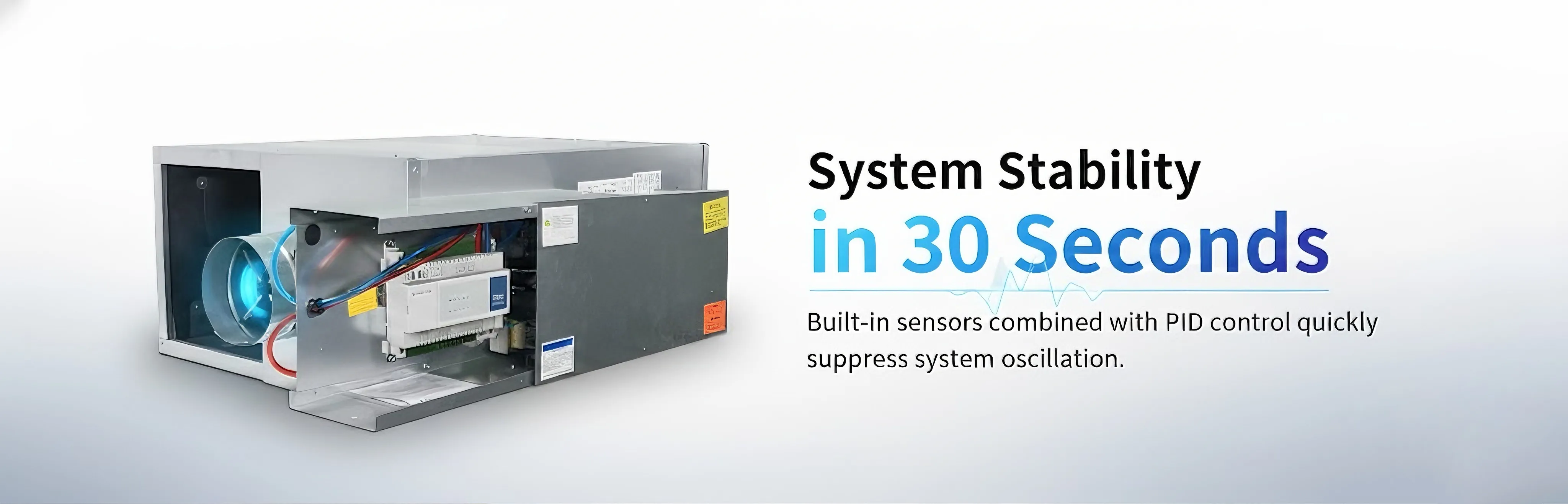
In a nutshell: Damper oscillation wastes energy and damages actuators. A high-resolution DP sensor with 0-10V PID logic eliminates hunting, cuts balancing time by 50%, and reduces maintenance costs. Read on for the technical fix.
Introduction
Introduction
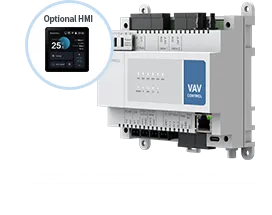
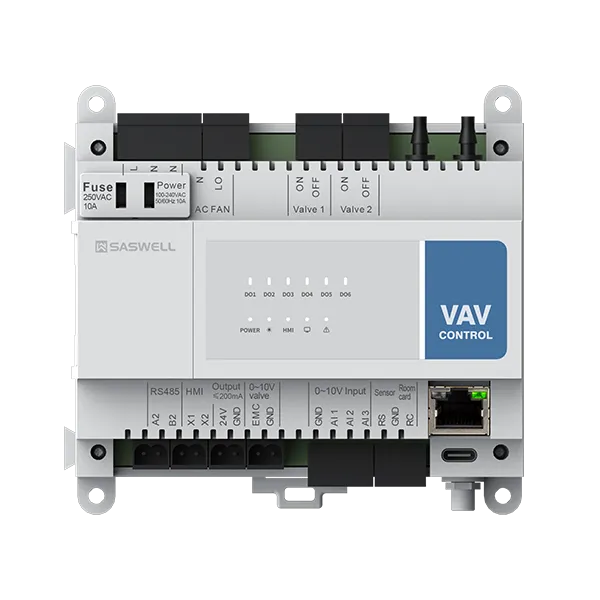
One of the most common headaches during HVAC commissioning is "system hunting"—the constant, unstable oscillation of dampers and airflow. This oscillation not only compromises occupant comfort but also causes premature wear on modulating actuators. While mechanical issues are often blamed, the root cause is frequently the controller's inability to process low-flow signals accurately. Our decoupled BACnet VAV controller solves this at the sensing level.
Why Low-Flow Precision Matters
Why Low-Flow Precision Matters
Most VAV boxes struggle at the lower end of their operating range. When a sensor lacks sensitivity, the DDC "guesses" the damper position, leading to aggressive over-correction. Our controller features an onboard industrial-grade high-resolution DP sensor that delivers 0.1 Pa pressure resolution. This precision allows the Pressure Independent (PI) logic to maintain a stable setpoint even at minimum cooling or ventilation levels—effectively eliminating the feedback loop that triggers hunting.
Learn more about decoupled architecture and how it prevents single-point failures.
The Advantage of 0-10V Modulation Over Floating Control
The Advantage of 0-10V Modulation Over Floating Control
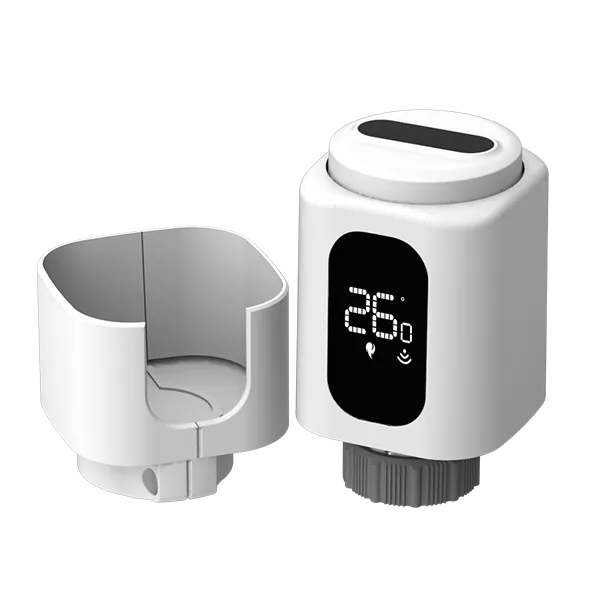
Traditional floating (3-point) control is inherently reactive and prone to lag. In contrast, 0-10V modulating control provides instantaneous, linear positioning. When paired with advanced PID algorithms, our controller calculates the exact damper angle required and sends a precise voltage signal. This predictive movement avoids the "overshoot and undershoot" cycle, ensuring the system reaches equilibrium faster during load changes.
See how energy-efficient VAV solutions for offices leverage 0-10V precision to cut HVAC energy by 30%.
Learn more about our PID Optimization & Velocity Control →
Streamlining the Air Balancing Process
Streamlining the Air Balancing Process
Air balancing is traditionally a labor-intensive manual process. Our BACnet MS/TP connectivity simplifies this by allowing technicians to perform "digital balancing" through the controller interface. Since the DDC natively supports 2-stage reheat and auxiliary fan logic, balancers can verify the entire heating/cooling sequence remotely. This reduces field hours and ensures the energy model performs as designed.
For step-by-step instructions, follow our laptop-free commissioning guide.
Beyond Hunting Elimination: Multi‑Zone Stability
Beyond Hunting Elimination: Multi‑Zone Stability
Eliminating hunting is just the beginning. Our controller also integrates CO₂-based DCV for green buildings—read the LEED/WELL DCV guide. For hydronic heating applications, see hydronic reheat optimization. And if you are an OEM, check our OEM cost reduction guide to lower BOM.
Conclusion
Conclusion
Eliminating VAV instability requires more than mechanical adjustment—it requires precision at the sensing and output level. By utilizing decoupled VAV controllers with high-resolution DP sensors and linear 0-10V outputs, you transition from "fighting" the system to mastering it. Whether you are an OEM manufacturer or a retrofit contractor, precision is the key to a quiet, efficient building.
For critical environments like labs and cleanrooms, explore our laboratory VAV safety control system.
Take Action Today
- View full product line: Saswell VAV Controllers
- For commercial buildings: Energy‑efficient VAV solution for offices
- Critical environments (labs/cleanrooms): Lab VAV safety control system
- Download datasheet: Contact us for specifications and pricing.