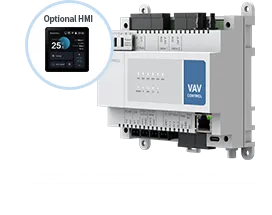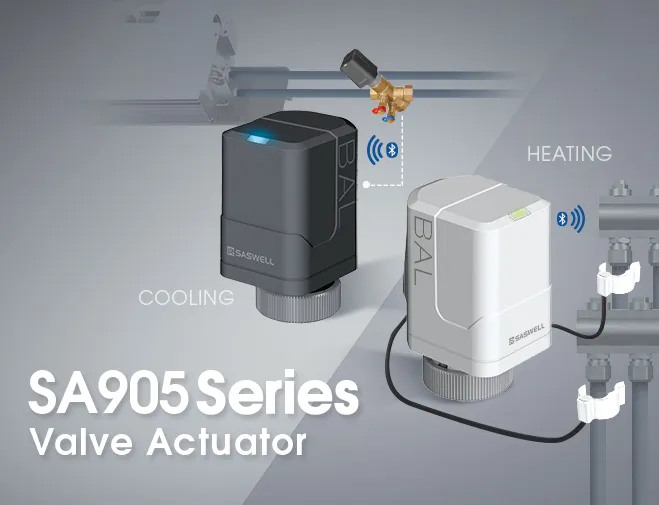



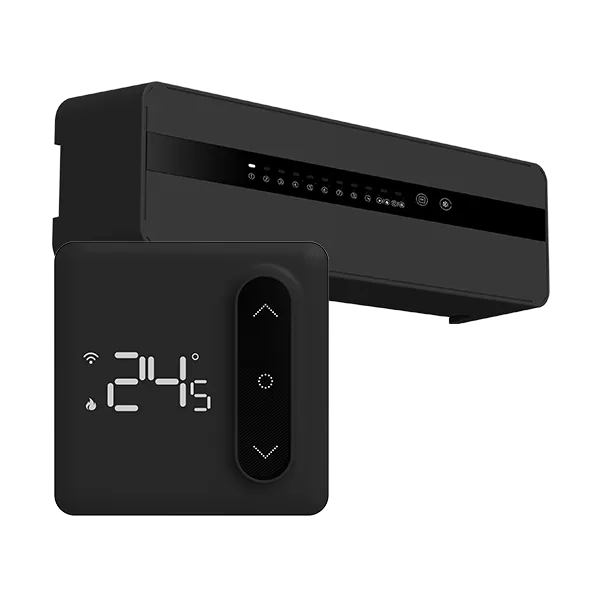


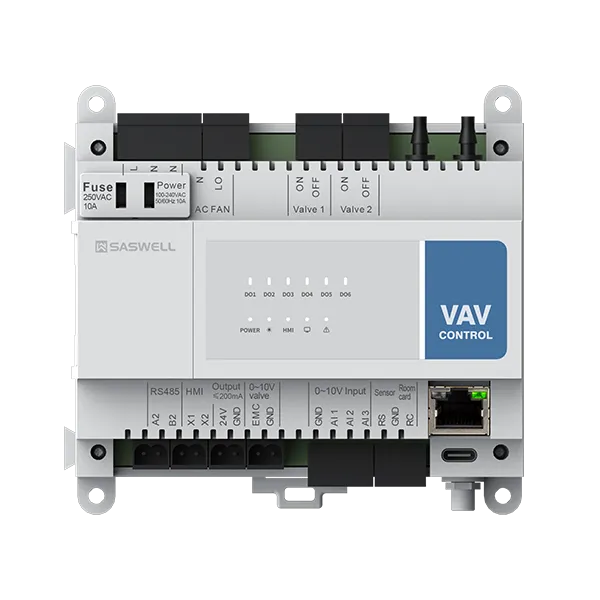


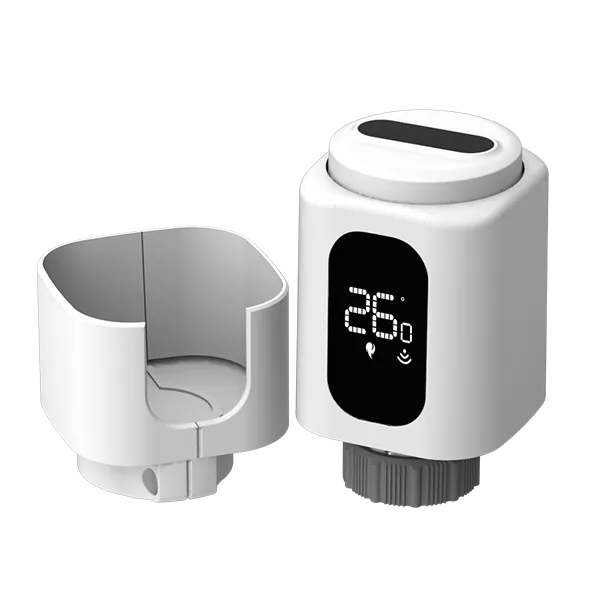


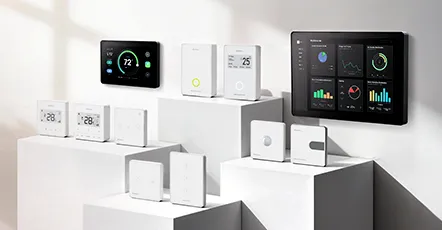





In a nutshell: The best HVAC architecture depends on the project — but the control platform should be universal. An open, decoupled VAV controller works across CAV, VRF, and VAV systems, reducing engineering complexity and supply chain risk.
Introduction
Introduction
In commercial buildings, the choice of HVAC architecture is typically driven by building size, climate conditions, project budget, construction timeline, and long-term operational strategy. CAV, VRF, and VAV are all proven and widely deployed technologies, each with its own advantages depending on the application.
From a control system supplier's perspective, the goal is not to promote a specific HVAC architecture, but to provide a stable, open, and scalable universal VAV control solution or control platform for any architecture.
1. CAV: A Reliable and Straightforward Foundation
CAV: A Reliable and Straightforward Foundation
Constant Air Volume (CAV) systems remain widely used in industrial facilities, laboratories, and buildings with relatively stable load profiles due to their simplicity and robustness. In CAV applications, control systems typically provide:
- Fan and damper control
- Temperature and reheat logic
- Standardized integration with supervisory BMS platforms
2. VRF: Flexible Distributed Zone Control
VRF: Flexible Distributed Zone Control
Variable Refrigerant Flow (VRF) systems are often applied in small to mid-size commercial buildings and retrofit projects, offering flexibility and good part-load efficiency. Control systems play a key role in:
- Multi-zone temperature and load regulation
- Coordination with dedicated outdoor air systems (DOAS) and energy recovery equipment
- Data integration and monitoring via BMS interfaces
3. VAV: Scalable Solutions for Large Commercial Buildings
VAV: Scalable Solutions for Large Commercial Buildings
Variable Air Volume (VAV) systems are widely deployed in large office buildings, healthcare facilities, campuses, and transportation hubs, supported by mature engineering practices and a scalable system architecture. Using a modern VMA controller replacement ensures these systems are not tethered to proprietary brand lock-ins. In VAV applications, control systems typically manage:
- Precise airflow and temperature control
- Zone-level comfort regulation
- Coordination with centralized chilled water and air handling systems
4. Control Systems as an Architecture-Agnostic Intelligence Layer
Control Systems as an Architecture-Agnostic Intelligence Layer
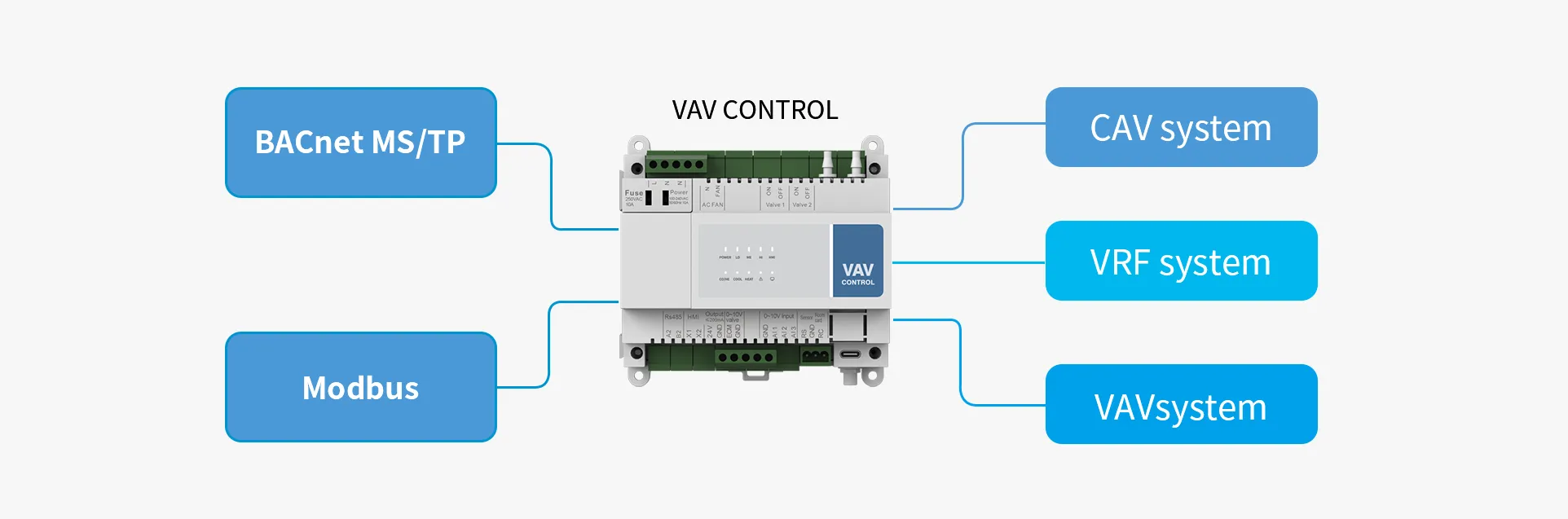
Regardless of whether CAV, VRF, or VAV is selected, the control system forms the core layer for energy optimization, comfort control, and digital operations. A modern control platform can provide unified capabilities across HVAC architectures, including:
- Closed-loop temperature and airflow control
- Demand-controlled ventilation (DCV) based on CO₂ and occupancy signals — see DCV for LEED/WELL
- Standard protocol support (BACnet, Modbus, etc.)
- Seamless integration with mainstream BMS platforms
- Data acquisition interfaces for energy and performance analytics
Architectures may differ, but reliability and openness of the control platform are universal requirements.
Image ALT: Architecture-agnostic control platform for CAV, VRF, and VAV systems supporting BACnet MS/TP and Modbus.
5. Control Use Case: VAV Zone Control
Control Use Case: VAV Zone Control
In VAV systems, integrated zone controllers can simplify engineering design and improve system consistency. Typical capabilities include:
- Integrated BACnet air pressure sensing for airflow feedback, reducing external sensors and wiring.
- 0–10 V actuator interfaces supporting multi-vendor actuators (such as Belimo or Honeywell), enabling global VAV box manufacturer supply chain flexibility.
- Adaptive PID algorithms for stable airflow control and reduced oscillation, effectively solving VAV system hunting.
- CO₂ sensor inputs for demand-controlled ventilation strategies.
- Multi-stage reheat and fan-powered box control logic — explore hydronic reheat optimization
- Occupancy and keycard inputs for energy-saving control modes — see GRMS integration
These features illustrate how a control system can function as a standardized embedded module within an OEM VAV product platform.
6. Value for OEMs and System Integrators
Value for OEMs and System Integrators
For equipment manufacturers and system integrators, a standardized control platform helps to:
- Reduce BOM cost and engineering complexity.
- Shorten commissioning and project delivery cycles — follow our laptop-free commissioning guide
- Provide unified communication interfaces for system integration.
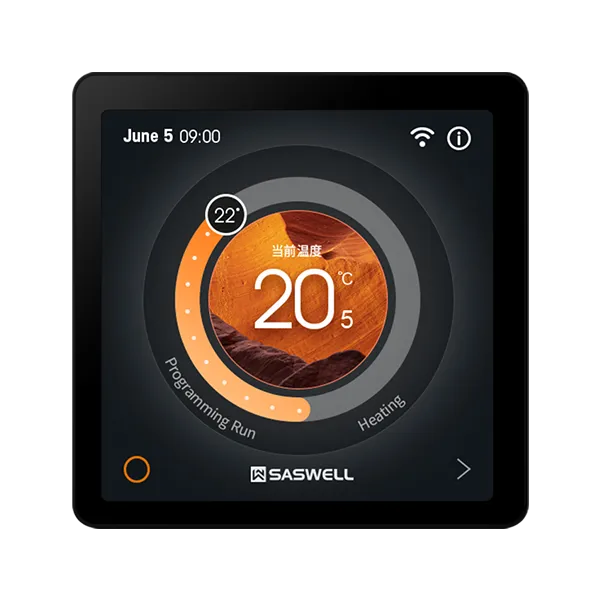
- Support custom firmware and private labeling (7-Day Rapid Branding) on our 4‑inch HMI.
- Ensure long-term supply and firmware lifecycle management.
A modular control platform enables OEMs to focus on their core mechanical and system engineering competencies.

Image ALT: Customizable 4-inch HMI for VAV box manufacturer branding and private labeling.
7. Lifecycle and Digital Operations
Lifecycle and Digital Operations
Control systems provide the foundational data layer for building lifecycle management, including:
- Energy and operational performance monitoring.
- Maintenance optimization and fault diagnostics.
- ESG and energy reporting data interfaces.
- Integration with cloud platforms and digital services.
8. Typical Application Scenarios
Typical Application Scenarios
The control platform can be deployed in commercial office buildings, hotels, healthcare facilities, and OEM-customized HVAC equipment platforms. For specific verticals, explore our commercial building VAV solution and laboratory VAV safety control system.
9. Conclusion
Conclusion: Architecture Is a Choice — Control Platforms Should Be Unified
HVAC architecture selection depends on project-specific conditions and engineering strategy. A stable, open, and customizable control platform is a fundamental component of any modern building system. We focus on providing architecture-agnostic control platforms for OEMs and system integrators, supporting multiple HVAC technology paths in product development and deployment.
For a direct alternative to Tier‑1 integrated controllers, read our Siemens VAV alternative comparison and JCI VMA replacement guide.
10. Take Action Today
- View full product line: Saswell VAV Controllers
- For commercial buildings: Energy-efficient VAV solution for offices
- Critical environments (labs/cleanrooms): Lab VAV safety control system
- Download technical whitepaper: Contact us for architecture-agnostic control platform documentation.