













In a nutshell: Traditional VAV commissioning takes hours with expensive software. Our HMI-driven approach cuts calibration time from 30+ minutes to under 5 minutes — no laptop, no license fees. Here's the step-by-step checklist.
Introduction
Introduction
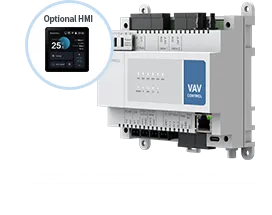
For any VAV box manufacturer or field technician, the transition from mechanical assembly to a fully functional "Smart Terminal" depends on a flawless commissioning process. Proprietary VMA controllers often hide critical logic in a black box, forcing you to rely on expensive software and factory support. A universal BACnet VAV controller with an onboard HMI changes everything — transparency, speed, and full control at your fingertips.
This guide covers five essential steps: physical inspection, DP sensor calibration, PID tuning, HMI setup, and BACnet integration. Follow along to cut commissioning time by 70% and eliminate costly software licenses.
1. Physical Inspection & Non-Polar PLC Verification
Physical Inspection & Non-Polar PLC Verification
Before powering up, verify the physical layer. One of the biggest causes of terminal burnout is wiring polarity errors.
- Wiring check: Ensure you are using non-polar PLC technology for power and data sharing. Non-polar wiring eliminates installation errors and cuts labor time by 50%.
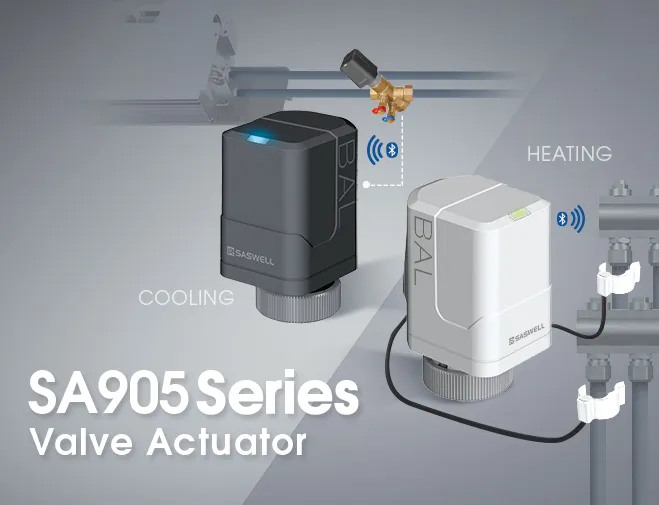
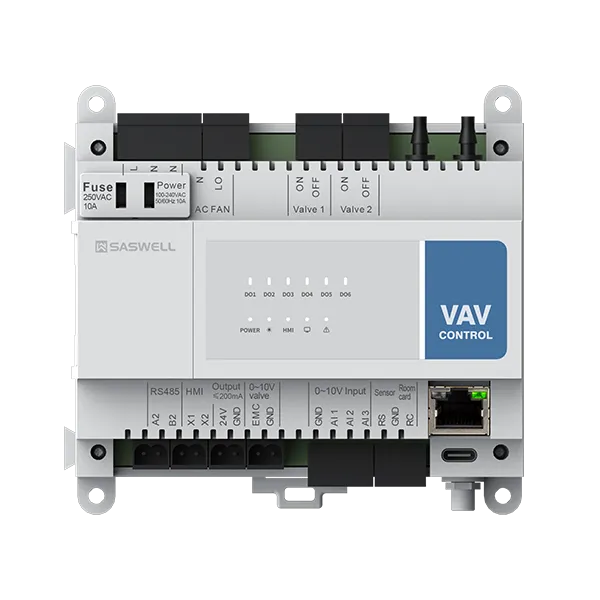
- Hardware freedom: Confirm the 0-10V modulating actuator is correctly seated on the damper shaft. Our BACnet MS/TP VAV controller works with any standard 0-10V actuator — Belimo, Honeywell, Siemens, or Gruner.
Image ALT: VAV box assembly line integrating universal 0-10V actuators and BACnet VMA controller alternative.
2. Differential Pressure (DP) Sensor & Air Pressure Calibration
Differential Pressure (DP) Sensor & Air Pressure Calibration
To achieve stable BACnet air pressure control, the integrated DP sensor must be zero-calibrated.
- Zero-point calibration: Perform calibration under "no-flow" conditions to ensure the sensor reads 0 Pa. Our onboard sensor delivers 0.1 Pa resolution — critical for low-flow precision.
- Verification: Ensure pressure readings are consistent across the BACnet MS/TP network for accurate air balancing. For more on eliminating oscillations caused by poor pressure sensing, see our VAV system hunting fix guide.
Image ALT: High-precision DP sensor location for BACnet air pressure calibration in VAV box manufacturing.
3. Precision PID Parameter Tuning
Precision PID Parameter Tuning
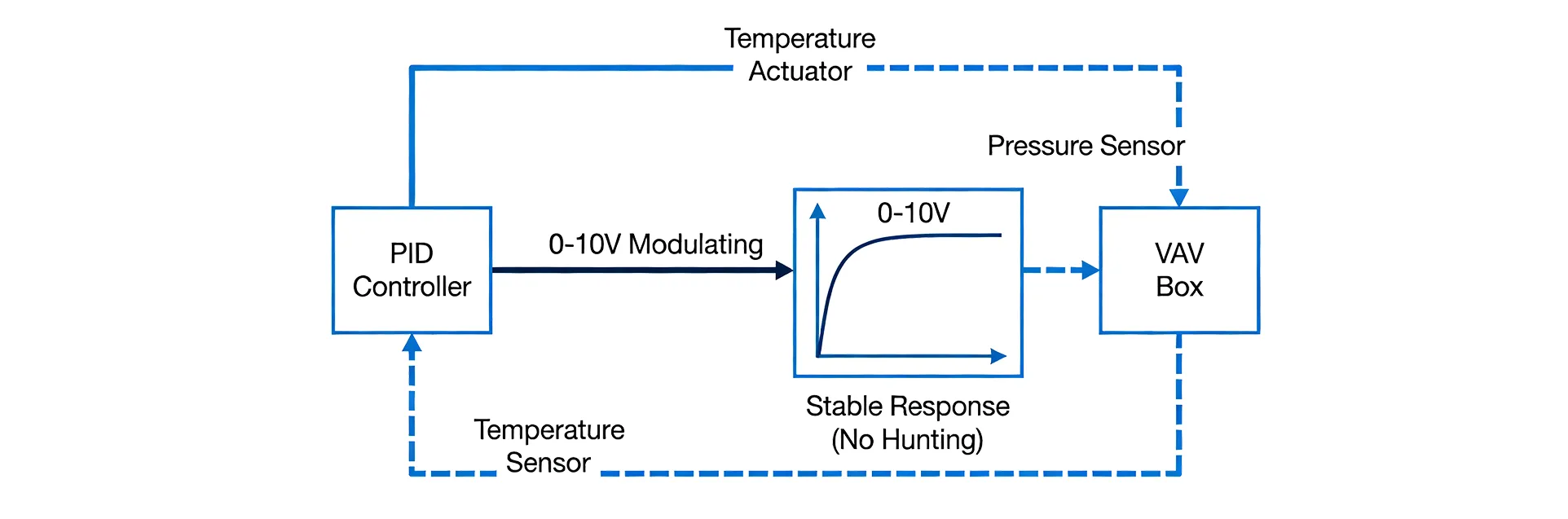
This is the most critical step to prevent VAV system hunting. Traditional floating-point control is often too slow and reactive, leading to oscillations.
- Proportional gain (P): Increase until the damper responds quickly to setpoint changes without overshoot.
- Integral time (I): Adjust to eliminate steady-state error.
- Derivative (D): Fine-tune to dampen sudden disturbances.
- Linear regulation: Utilize 0-10V precision PID logic to ensure smooth, quiet operation. Proper PID tuning also reduces actuator wear and extends equipment life.
4. HMI Local Interface & Parameter Mirroring
HMI Local Interface & Parameter Mirroring
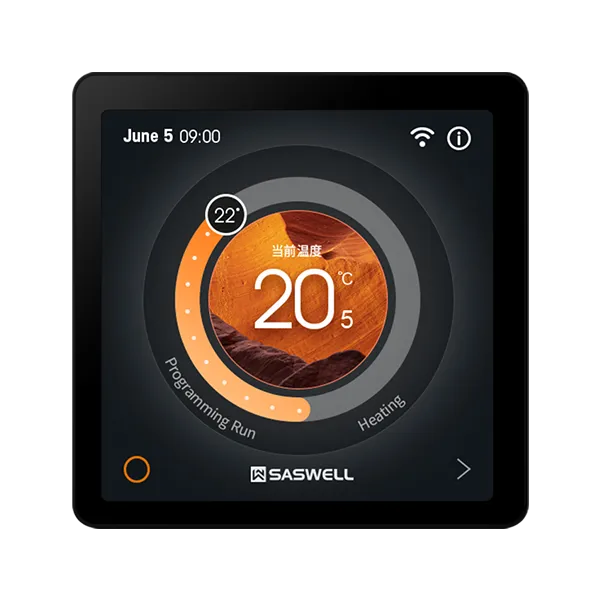
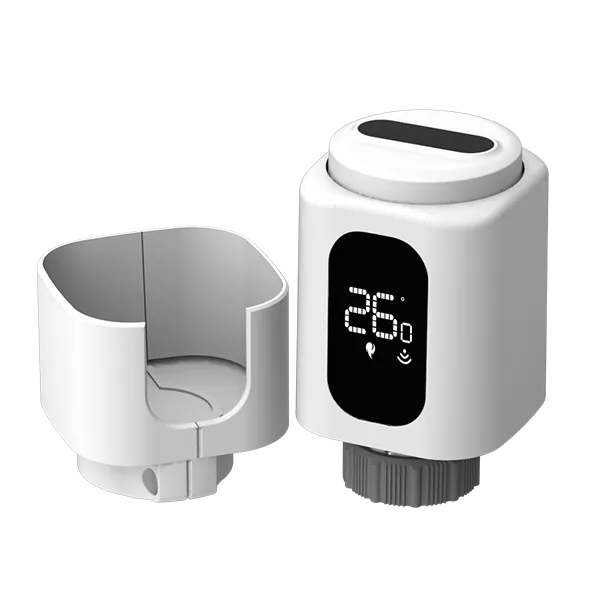
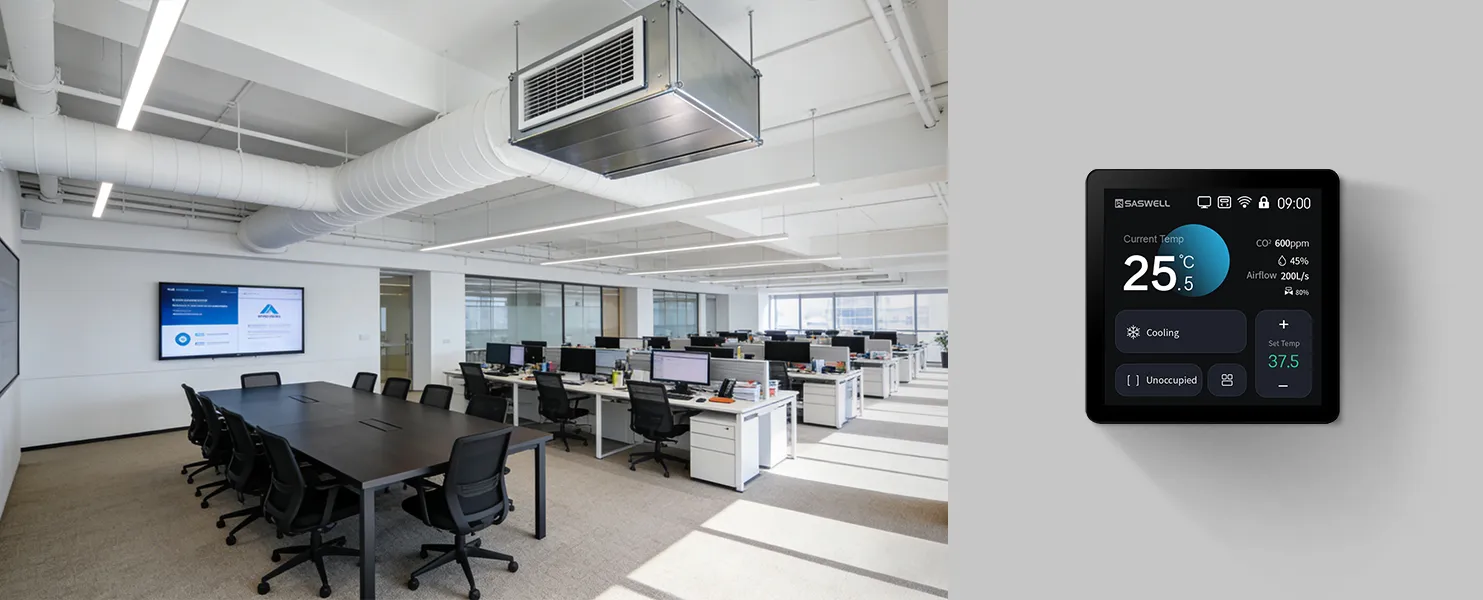
The 4‑inch full capacitive touch color screen (SAS965-HMI) serves as the local window into the controller's intelligence. With the HMI, technicians can:
- View real‑time temperature, pressure, airflow, and CO₂ readings.
- Adjust setpoints, K‑factors, and actuator stroke without any software.
- Perform complete commissioning in under 5 minutes per zone.
- 7‑Day Rapid Branding: For OEMs, the HMI can be customized with your logo and color scheme, transforming a standard component into your proprietary branded solution. Learn more about OEM cost reduction and private labeling.
5. BACnet Integration & Multi-Functional Logic
BACnet Integration & Multi-Functional Logic
Once hardware is calibrated, verify communication with the building automation system (BAS).
- Native objects: Ensure all BACnet objects for temperature, pressure, airflow, CO₂ DCV, and 2‑stage reheat are discoverable by the BAS.
- Hotel logic: Verify that occupancy-based keycard logic is active if required for hospitality projects. See our GRMS integration guide for advanced hotel room control.
- Third‑party BMS compatibility: Our controllers integrate seamlessly with Tridium Niagara, JCI Metasys, Siemens Desigo, and ALC WebCTRL. For a direct comparison with Tier‑1 brands, read our Siemens VAV alternative analysis.
After Commissioning: Ongoing Maintenance Tips
- Re‑zero the DP sensor every 6 months to maintain accuracy.
- Monitor trend logs via BACnet to detect early signs of filter clogging or actuator drift.
- Use the HMI to quickly troubleshoot occupant complaints without opening a laptop.
Conclusion
Conclusion
Commissioning doesn't have to be a bottleneck. With a decoupled BACnet VAV controller, an integrated high‑resolution DP sensor, and a user‑friendly HMI, you can slash commissioning time, eliminate software license costs, and deliver a system that is easy to maintain for years. Whether you are an OEM manufacturer, a contractor, or a building owner, this checklist ensures your VAV boxes perform reliably from day one.
For critical environments like laboratories and cleanrooms, explore our lab VAV safety control system. For commercial office buildings, see energy‑efficient VAV solutions for offices.
Take Action Today
- View full product line: Saswell VAV Controllers
- For commercial buildings: Energy-efficient VAV solution for offices
- Critical environments (labs/cleanrooms): Lab VAV safety control system
- Download commissioning checklist PDF: Contact us for a printable version.