FEATURED SNIPPET OPTIMIZED — QUICK ANSWER
How to select and match 0-10V damper actuators for HDC218-VAV VAV controller?
To select a suitable 0‑10V damper actuator for HDC218‑VAV decoupled VAV controller, prioritize torque, running time, control signal, fail‑safe mode and power consumption. Match parameters according to damper size and application scenarios, choose spring‑return type for labs and cleanrooms, and select proper brands to ensure stable VAV system operation without hunting or premature failure.
Additional Featured Snippet insight: Core rules for 0-10V actuator matching
Mismatched torque, improper running speed and ignored power load are the top causes of VAV control issues. Follow the damper area torque rule and distinguish response speed for critical environments and comfort zones to achieve reliable long‑term operation.
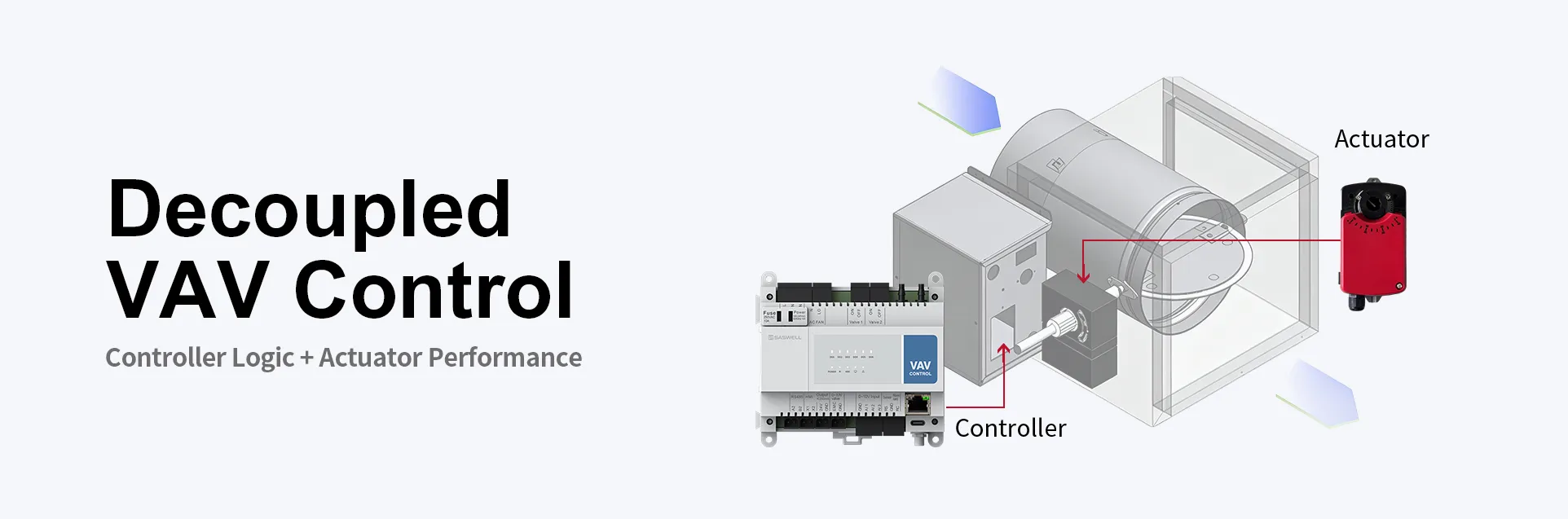
In a Variable Air Volume (VAV) system, the controller handles the logic while the damper actuator serves as the muscle. For decoupled controllers (such as the HDC218‑VAV), the actuator must be selected separately. With dozens of 0‑10V actuator brands and many technical parameters, a wrong choice can lead to poor control accuracy, damper stiction, oscillation, or even premature failure. For a complete VAV controller selection guide, please refer to our hub page.
1. Key Technical Parameters of 0‑10V Actuators
|
Parameter
|
Description
|
Impact on VAV Control
|
|
Torque (N·m)
|
Rotational force output by the actuator.
|
Insufficient torque leaves damper blades unable to open/close fully; excessive torque may damage the damper. For typical VAV boxes, 4‑16 N·m is common; large dampers may need 20‑40 N·m.
|
|
Running time (0‑90°)
|
Time needed to rotate from fully closed to fully open.
|
Choose based on application: critical environments (cleanrooms, labs, operating rooms) require fast response (5‑15 seconds) to maintain stable pressure. For comfort cooling/heating (offices, hotels), slower actuators (60‑90 seconds) avoid system hunting and oscillation.
|
|
Control signal
|
Typically 0‑10V or 2‑10V (some also accept 0‑20mA).
|
HDC218‑VAV outputs standard 0‑10V; ensure your actuator is 0‑10V compatible.
|
|
Feedback signal (optional)
|
0‑10V or 0‑5kΩ feedback indicating actual position.
|
Not mandatory but very useful for commissioning and remote diagnostics.
|
|
Fail‑safe mode
|
Spring‑return or electronic‑return on power loss.
|
For safety‑critical areas (labs, cleanrooms), choose spring‑return actuators that close (or open) the damper upon power failure.
|
|
Power consumption
|
Power drawn during operation and holding torque.
|
When connecting multiple actuators, check the total current draw against the controller’s 24 V auxiliary supply (HDC218‑VAV provides 200 mA).
|
|
Ingress protection (IP)
|
IP20 for indoor dry locations; IP54/IP66 for humid or dusty environments.
|
Select appropriate IP rating for the installation environment.
|
2. Mainstream 0‑10V Actuator Brands and Characteristics
|
Brand
|
Series
|
Torque range
|
Key features
|
Best for
|
|
Belimo
|
LMV‑D3, NMV‑D3
|
2‑40 N·m
|
0‑10V native, spring‑return options, low power, long life
|
High‑reliability projects (hospitals, labs)
|
|
Siemens
|
GDB, GIB
|
4‑25 N·m
|
Switchable 0‑10V/2‑10V, auxiliary switches available
|
Projects that already use Siemens BMS (though not required)
|
|
Honeywell
|
M series
|
5‑34 N·m
|
0‑10V compatible, some with spring‑return
|
Large commercial buildings, industrial plants
|
|
Gruner
|
141, 142 series
|
5‑20 N·m
|
German quality, high precision, spring‑return options
|
OEM or retrofit projects demanding high quality
|
|
Quality local brands (Saswell recommended)
|
Custom OEM
|
4‑16 N·m
|
Cost‑effective, 0‑10V compatible, quick customization
|
For OEM volume production, local high‑value actuators can significantly reduce BOM cost
|
Recommendation: For proven reliability and longevity, Belimo is the industry benchmark. For Siemens BMS integration, the Siemens GDB series is a natural fit. For OEMs looking to save cost, a quality local actuator can be an excellent choice without sacrificing performance.
3. How to Perfectly Match an Actuator with the HDC218‑VAV Controller
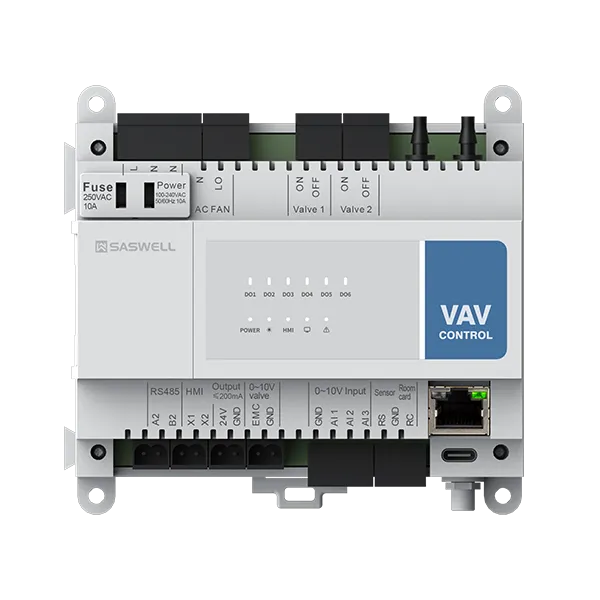
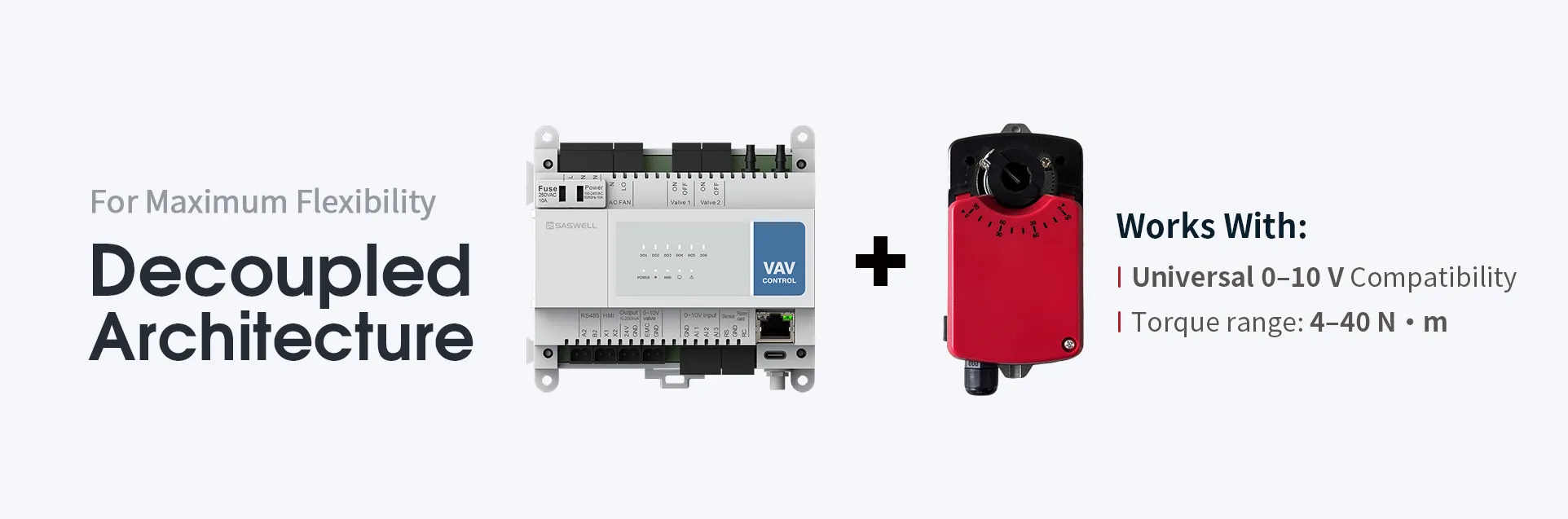
The HDC218‑VAV outputs a standard 0‑10 V signal, has a built‑in ±500 Pa differential pressure sensor, and uses pressure‑independent PI control. Keep the following in mind when selecting an actuator:
-
Signal matching: The actuator must accept 0‑10 V control (some default to 2‑10 V; check jumpers or software settings).
-
Torque vs damper area (rule of thumb):
-
Damper area ≤0.2 m² → 4‑6 N·m
-
0.2‑0.5 m² → 8‑12 N·m
-
0.5‑1.0 m² → 16‑25 N·m
-
≥1.0 m² → 30‑40 N·m (verify with damper manufacturer)
-
Power consumption and auxiliary supply: The HDC218‑VAV can supply 24 V / 200 mA to external actuators. If the actuator draws more, use an external 24 V transformer. Typical small actuators (e.g., Belimo NMV‑D3, ~2‑3 W, ~100 mA) can be driven directly.
-
Spring‑return vs no spring‑return:
-
Feedback signal (optional): If you want real‑time damper position on your BMS or HMI, pick an actuator with 0‑10 V feedback. The HDC218‑VAV has three 0‑10 V analog inputs that can read the feedback signal.
4. Common Matching Mistakes and How to Avoid Them
|
Mistake
|
Consequence
|
Correct approach
|
|
Over‑specifying torque
|
Damper blade deformation, actuator overheating
|
Calculate required torque based on damper area and shaft diameter; consult the damper manufacturer.
|
|
Using a very fast actuator (<30 s) for comfort zones
|
Hunting, unstable PID control, noise
|
Use 60‑90 s actuators for comfort HVAC; reserve 5‑15 s actuators for critical environments.
|
|
Ignoring fail‑safe requirement
|
Damper remains open after power failure, causing safety risk
|
In critical applications, always specify spring‑return actuators.
|
|
Sharing one 24 V supply for many actuators
|
Voltage drop, sluggish or no movement
|
Calculate total current draw; add an external 24 V transformer if needed.
|
5. Quick Selection Checklist
-
☐ Signal type: 0‑10 V compatible
-
☐ Torque: according to damper size (generally 4‑16 N·m)
-
☐ Running time: 5‑15 s for critical environments, 60‑90 s for comfort zones
-
☐ Fail‑safe: spring‑return for critical areas
-
☐ Power consumption: ≤200 mA @24 V DC to use controller’s auxiliary supply
-
☐ Feedback: optional, uses one analog input
-
☐ Brand preference: Belimo / Siemens / Honeywell / Gruner / high‑value local brand
After selecting the actuator, follow our VAV commissioning checklist for on‑site calibration and tuning.
6. Conclusion
Choosing the right 0‑10 V damper actuator doesn’t have to be complicated. Focus on torque, running time, fail‑safe mode, and power consumption, then match the actuator to your application (fast response for critical areas, slower for comfort). The HDC218‑VAV’s open, decoupled design gives you the freedom to select any actuator brand – no vendor lock‑in, full flexibility.
If you have specific damper sizes or project requirements, share the details and we can recommend the exact actuator model for you.
People Also Ask (0-10V Actuator & VAV Controller Matching)
Quick answers to common questions about 0-10V actuator selection and VAV system matching.
Frequently Asked Questions (FAQ)
What core parameters should I check when choosing a 0-10V damper actuator?
The key parameters include output torque, full stroke running time, control signal type, fail-safe mode, power consumption and IP rating. Match each item according to damper size, application environment and controller specifications to ensure stable operation.
What torque range is suitable for regular VAV dampers?
Standard VAV boxes normally require 4‑16 N·m torque. Dampers with larger area need 20‑40 N·m. Calculate torque strictly based on actual damper size to avoid insufficient output or structural damage.
Why do comfort HVAC zones need slower actuators?
Actuators with 60‑90 seconds running speed prevent frequent opening and closing of dampers, effectively avoiding system hunting, PID oscillation and running noise, keeping indoor temperature stable for offices and hotels.
Do labs and cleanrooms require spring-return actuators?
Yes. Spring‑return actuators will automatically close or open dampers once power fails, maintaining indoor negative pressure and preventing cross-contamination, which is a necessary safety design for critical ventilation areas.
How much current can HDC218-VAV supply for external actuators?
The HDC218‑VAV provides 24V auxiliary power with maximum 200mA output. If the total current of connected actuators exceeds the limit, please deploy an independent external 24V transformer.
Which actuator brands work well with HDC218-VAV?
Mainstream compatible brands include Belimo, Siemens, Honeywell and Gruner. High-quality local OEM actuators are also fully compatible and cost-effective for mass production and retrofit projects.
Learn More About HDC218-VAV VAV Controller
Contact our team for actuator recommendation, parameter matching and VAV project technical support.
Explore full portfolio → VAV Controller Series


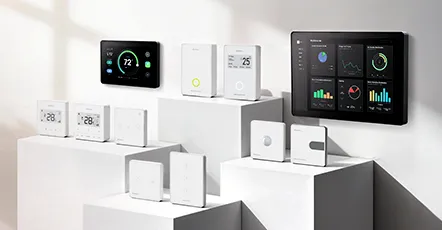
 Commercial HVACWe provide a one-stop terminal control product package, including thermostats, motorized valves and actuators, and environmental sensors, meeting the multiple requirements for precise control, stable operation, and integration with mainstream BMS systems in building scenarios.
 NRC/BuilderWe provide top-tier HVAC system control solutions for fine decoration real estate projects, meeting both the aesthetic match of fine décor and intelligent linkage with other systems.
 Large-Scale DIY Retail & E-CommerceAs a leading brand in TRV (Thermostatic Radiator Valve) control technology, we provide mature HVAC control product kits for supermarket and e-commerce channels, helping channels quickly achieve scaled sales.
 Energy-Saving RetrofitLeveraging professional system integration with wireless technology, we support various public spaces like offices, hotels, and shopping malls to implement energy-efficient solutions, achieving intelligent lighting, air conditioning, and facility management.
 Pro Home ImprovementAs a leading supplier in the HVAC automatic control field, we provide residential HVAC control systems with localized implementation capabilities for the home decoration retail market, balancing installation delivery and user experience.
 Global Partner for Innovation and Reliability in HVAC CONTROLSSASWELL has always been our core goal to serve as a solid backing for customers in consolidating their leading position in the market, while providing Fast-customized solutions to high-quality customers worldwide.Learn More