












1. The "Silent" Barrier: Interaction vs. Logic
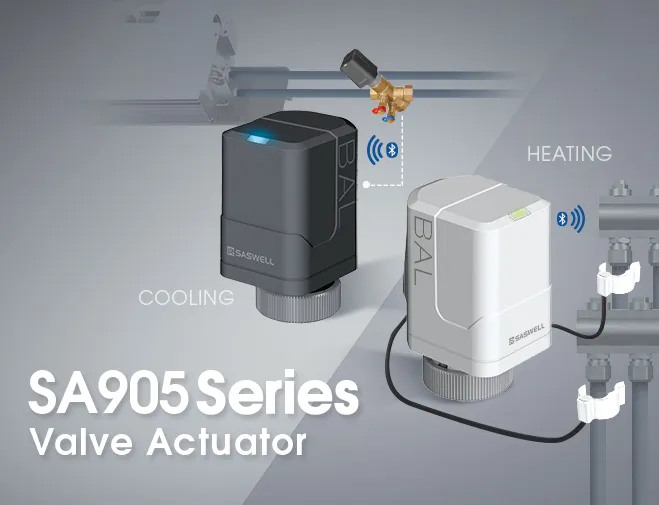
Smart home brands are masters of UX, but driving a 3-speed fan, an EC motor, or a 0-10V modulating valve requires more than just a touch. It requires a professional HVAC logic base to manage critical terminal operations:
- Heavy-duty Hardware: To handle high-voltage loads without burning out circuits.
- Complex Algorithms: PID stabilization, anti-condensation logic, and heat source linkage.
- Terminal Protection: Preventing compressor short-cycling and ensuring fan longevity.
Most smart panels simply lack the "muscles" (hardware) or the "brains" (HVAC logic) to perform these tasks directly.
2. The Problem: The "Frankenstein" System
Without a dedicated logic bridge, integrators often patch together generic relays. This leads to a persistent noise problem caused by mechanical relays clicking behind the screen, along with other risks:
- Safety Risks: High-voltage wires running directly into the wall-mounted UI.
- Incompatibility: Mismatched driving voltages that prevent 0-10V valves from operating correctly.
3. The Solution: HDC as the "HVAC Middleware"
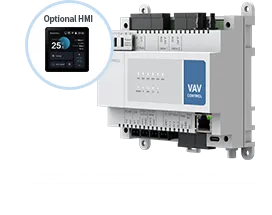
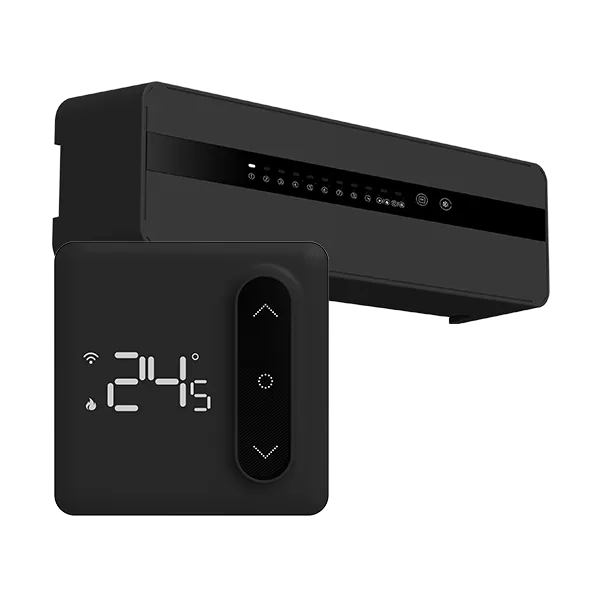
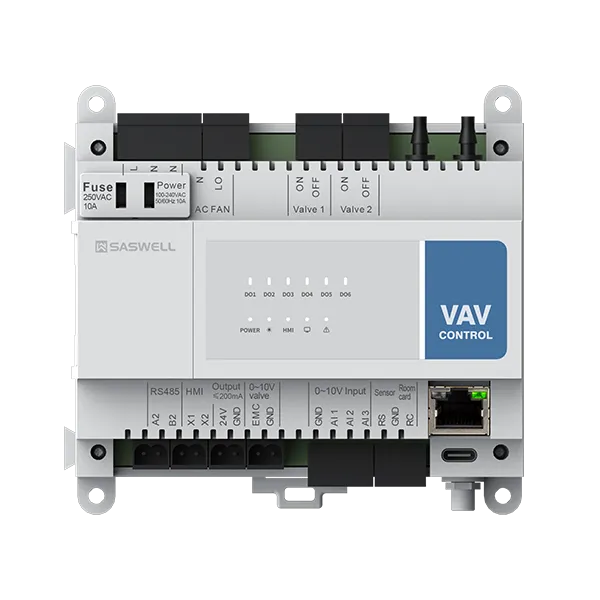
The HDC (Heavy-duty Controller) acts as a professional HVAC logic bridge. By decoupling the driving unit from the interaction panel, we create a seamless HDC+HMI split architecture flow:
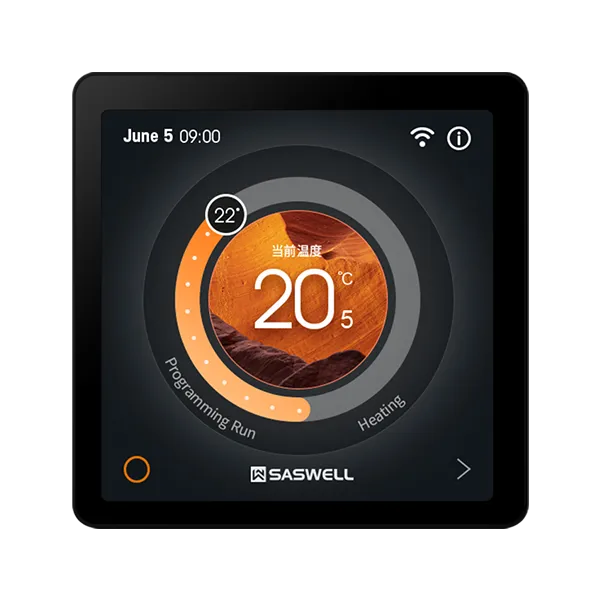
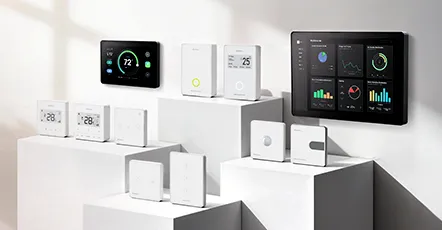
- Your Panel: Sends a simple temperature command via Zigbee, KNX, or RS485.
- The HDC: Executes the "heavy lifting"—calculating PID and driving the modulating valve.
The result is a professional climate experience without the smart home brand having to develop complex HVAC hardware.
4. Conclusion: Focus on Beauty, Leave the Control to Us
The future of smart buildings is about specialized units working in harmony. By using a decoupled logic architecture, smart home companies can finally offer an HVAC experience that matches their premium UI.