
Mastering Hydronic Reheat in VAV Systems: A Guide to Multi-zone BACnet Heating Control

Apr 23,2026
Mastering Hydronic Reheat in VAV Systems | Multi-zone BACnet Control Guide
QUICK ANSWER — VAV HYDRONIC REHEAT
How to optimize hydronic reheat and eliminate energy fighting?
The HDC218 VAV controller offers dual-stage coil management, intelligent airflow limiting, and a decoupled 0-10V output — eliminating energy fighting, reducing BOM costs by 30%, and ensuring seamless BACnet MS/TP integration for multi-zone HVAC systems.

In a nutshell: Struggling with hydronic reheat inefficiency? The HDC218 VAV controller offers dual-stage coil management, intelligent airflow limiting, and a decoupled 0-10V output — eliminating energy fighting and reducing BOM costs by 30%.
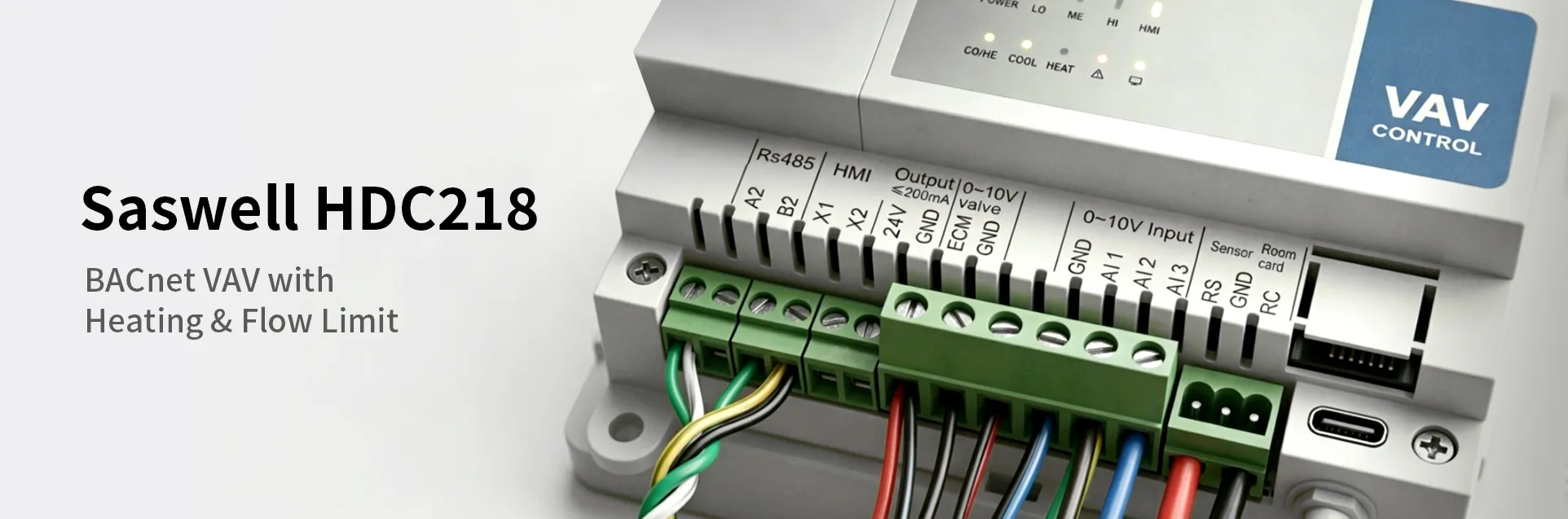
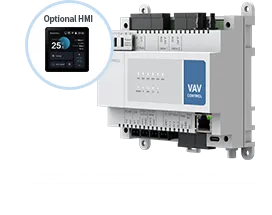
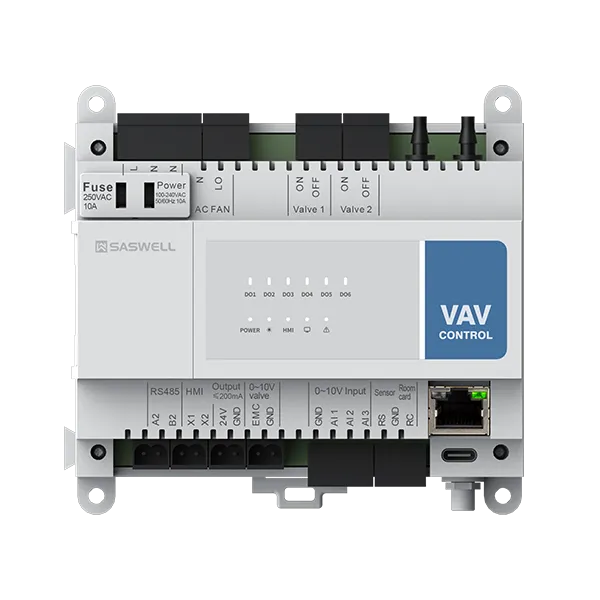
Saswell HDC218 BACnet VAV controller with multi-zone heating and airflow limiting features

Introduction

Introduction
In large-scale commercial or hospitality projects, achieving a balance between energy efficiency and thermal comfort often hinges on the precise management of VAV hydronic reheat coils. When airside cooling meets waterside heating at the terminal unit, a lack of synchronized logic can lead to "energy fighting"—where the system wastes power by cooling and heating simultaneously.

The Technical Challenge: Synergizing Air and Water

The Technical Challenge: Synergizing Air and Water
Modern multi-zone HVAC logic requires more than simple ON/OFF signals. Engineers need a controller that can modulate both the air damper and the hot water valve via BACnet MS/TP connectivity to ensure seamless transitions. Our HDC218 VAV controller is purpose-built for this complexity.

ALT: VAV hydronic reheat coil integration with Saswell HDC218 BACnet controller wiring diagram.
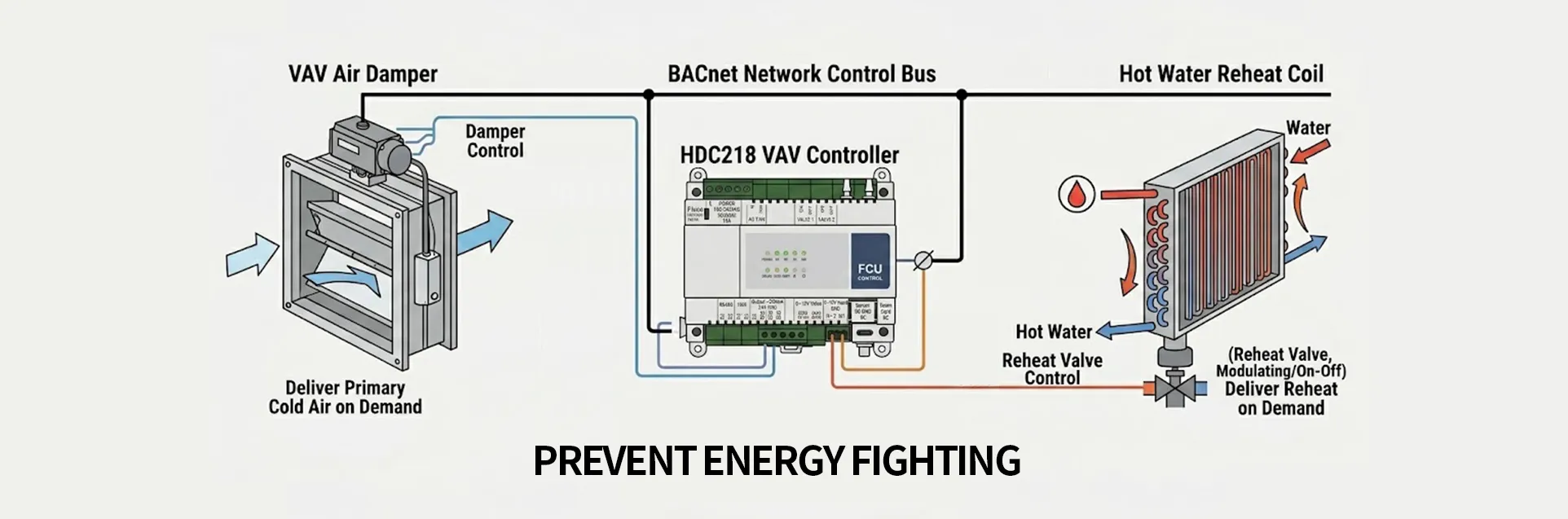
HDC218 VAV controller wiring logic for hydronic reheat and dual-stage coil management

How Saswell HDC218 Optimizes Multi-zone Hydronic Control

How Saswell HDC218 Optimizes Multi-zone Hydronic Control
The HDC218 VAV controller is designed specifically for these complex integration scenarios, offering hardware and logic features that outperform standard terminal units.

1. Dual-Stage Reheat Management

Dual-Stage Reheat Management
According to the HDC218 technical manual, the device supports dual-stage coil reheat (Address 72, Options 3 & 4). This allows for granular control over heating capacity, ensuring that the water valve modulates precisely based on the temperature deviation in each specific zone. Download HDC218 datasheet (PDF)

2. Smart Airflow Limiting Logic

Smart Airflow Limiting Logic
One of the most critical safety features of the HDC218 is the Reheat Airflow Limit (Addresses 36 & 37). To prevent coil overheating or stagnant air, the controller ensures that the airflow remains within a safe range (e.g., minimum 20% flow) whenever the hydronic reheat is active. For more on airflow stability, see our guide on VAV system hunting fix.

3. Decoupled Architecture for Sourcing Freedom

Decoupled Architecture for Sourcing Freedom
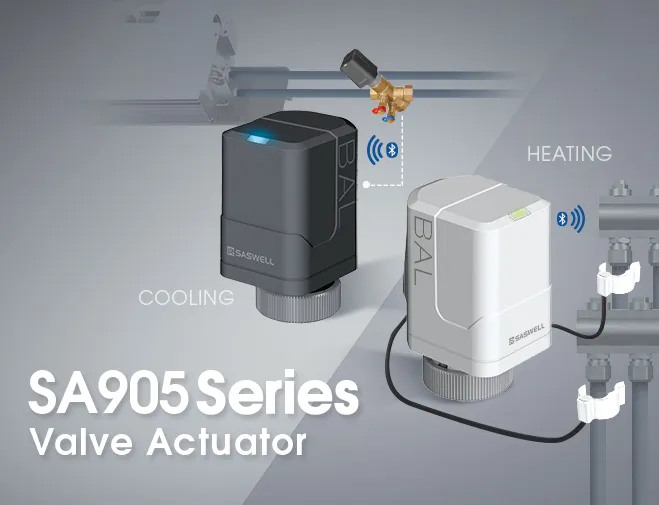
Because the HDC218 utilizes a decoupled design, it provides a 0-10V analog output (Address 7) compatible with any universal water valve actuator (e.g., Belimo, Siemens). This empowers manufacturers to optimize their BOM costs without being locked into a single proprietary ecosystem.

ALT: 0-10V modulating hot water valve controlled by BACnet multi-zone heating controller.

Beyond Reheat: Complete Multi‑Zone Intelligence

Beyond Reheat: Complete Multi‑Zone Intelligence
The HDC218 also integrates CO₂-based DCV for green buildings — read the LEED/WELL DCV guide. For occupancy-based control in hotels, see GRMS integration. And to ensure precise airflow measurement, follow our laptop-free commissioning guide.

Conclusion: Engineering a Sustainable Terminal

Conclusion: Engineering a Sustainable Terminal
By integrating HDC218 into your hydronic control solutions, you gain a professional-grade terminal brain capable of managing complex air-water synergy. It's not just a VAV controller; it's a total multi-zone comfort engine. For commercial building applications, explore our energy-efficient VAV solution for offices. For critical environments, see laboratory VAV safety control system.

Take Action Today

Get The HDC218 VAV Controller For Hydronic Reheat

Frequently Asked Questions (People Also Ask)

What is VAV hydronic reheat and why is it challenging?
VAV hydronic reheat uses hot water coils at terminal units to warm air during heating mode. The challenge is preventing "energy fighting" — simultaneous cooling and heating — which requires precise synchronization between air damper and water valve control.
How does the HDC218 prevent energy waste in reheat mode?
The HDC218 uses dual-stage reheat management and intelligent airflow limiting logic. It ensures the hot water valve modulates precisely based on zone temperature deviation while maintaining safe minimum airflow (e.g., 20%) to prevent coil overheating or stagnant air.
Does the HDC218 work with third-party actuators?
Yes. The HDC218 provides a standard 0-10V analog output compatible with any universal water valve actuator — Belimo, Siemens, Honeywell, or Gruner — giving OEMs sourcing freedom and BOM cost optimization.
What protocols does the HDC218 support?
The HDC218 supports BACnet MS/TP for seamless integration with building automation systems. It also supports native CO₂ DCV, occupancy keycard logic, and Modbus options for complete multi-zone control.
What is the Reheat Airflow Limit feature?
The Reheat Airflow Limit (Addresses 36 & 37) is a safety feature that ensures airflow remains within a safe range (e.g., minimum 20% flow) whenever hydronic reheat is active. This prevents coil overheating, stagnant air, and potential system damage.

Need to optimize hydronic reheat in your VAV systems? The HDC218 delivers dual-stage coil management, smart airflow limiting, and decoupled 0-10V output for energy-efficient multi-zone control. Contact us for OEM pricing and technical datasheets.

Latest News

System Kit or Standalone Thermostat? A Project Selection Guide for Hydronic Underfloor Heating

Jul 17,2026

Single-Master WiFi Architecture: Whole-Home App Control with One Thermostat

Jul 14,2026

Wireless RF Thermostat Technology for Hydronic Underfloor Heating Retrofits --- No Cables, No Mess, No Structural Damage

Jul 10,2026

How to Eliminate Thermostat Wiring Errors in Hydronic Underfloor Heating Systems

Jul 07,2026

Cleanroom VAV Control: Meeting ISO 14644 with Precision Pressure & Constant Airflow

Jun 01,2026

0-10V Damper Actuator Selection Guide: How to Choose the Best Actuator for Your VAV Controller

May 29,2026

How to Cut Heating Retrofit Labor Costs by 50%: The Business Logic of Cable-Free Technology

May 26,2026

Seeing is Saving: Utilizing Visualized Energy Data to Cut Heating Bills by 30%

May 22,2026

From Dumb Radiators to Smart Energy Assets: The Future of Grid-Interactive Heating

May 19,2026

Navigating the 2026 French Energy Subsidy: Why the SAS2024FHL-ZT5 is the Strategic Choice for Radiator Retrofits

May 17,2026

Multi-frame Supply Chain Advantage: Intercompatibility Testing with European Switch Panels

May 16,2026

Boiler Plus 2026 Guide: How OpenTherm Controls Achieve Compliance

May 06,2026

UK S-Plan & Y-Plan Dual Channel Thermostat – Complete Adapter’s Guide

May 05,2026

Zigbee 3.0 vs Wi-Fi vs Matter for HVAC – Which Protocol Should You Choose?

May 04,2026

OpenTherm vs On/Off Boiler Thermostat – The Ultimate Guide to Control Logic, Energy Savings & Boiler Plus Compliance

May 03,2026
CONTACT US
If you have questions or suggestions,please leave us a message,we will reply you as soon as we can!
Contact Us
SUBMIT NOW
Subscribe to Our Emails
Never miss SASWELL hot deals, news, and updates tailored for you.