













In a nutshell: For labs and cleanrooms, DDCs are over‑engineered and VMAs are under‑featured. The third path — a parameter‑based, decoupled VAV controller — delivers precision, flexibility, and cost efficiency without the headaches.
Introduction
When designing ventilation for high-demand spaces like laboratories and cleanrooms, engineers typically face a dilemma between two traditional methods. However, a third "Vertical Application" approach is now redefining the standard for efficiency and cost.
The Three Paths of VAV Control
1. The Programmable DDC (The "High Barrier" Path)
- The Logic: Using a general-purpose Direct Digital Controller.
- The Problem: It requires highly skilled engineers to write complex code from scratch. It's powerful, but the labor cost and commissioning time are enormous.
- Verdict: Over-engineered for most terminal applications. Follow our laptop-free commissioning guide to see how much easier vertical solutions are.
2. The Integrated VMA (The "Closed" Path)
- The Logic: An "all-in-one" actuator with a built-in controller, often from Tier-1 brands.
- The Problem: Most are designed for simple temperature control. They struggle with total environment logic (Pressure + CO₂ + Airflow). Plus, they are "locked" ecosystems—if one part fails, you replace the whole unit. Read our JCI VMA replacement guide for a real-world example.
- Verdict: Expensive and inflexible for critical environments.
3. Saswell Vertical Solution (The "Precision" Path)
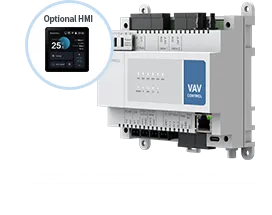
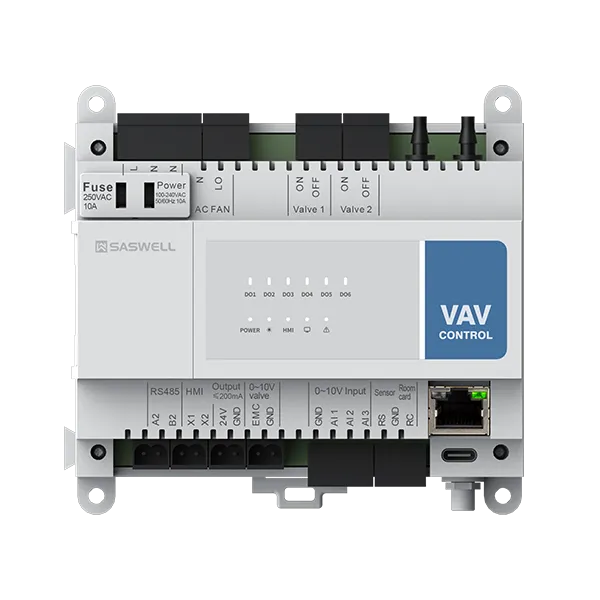
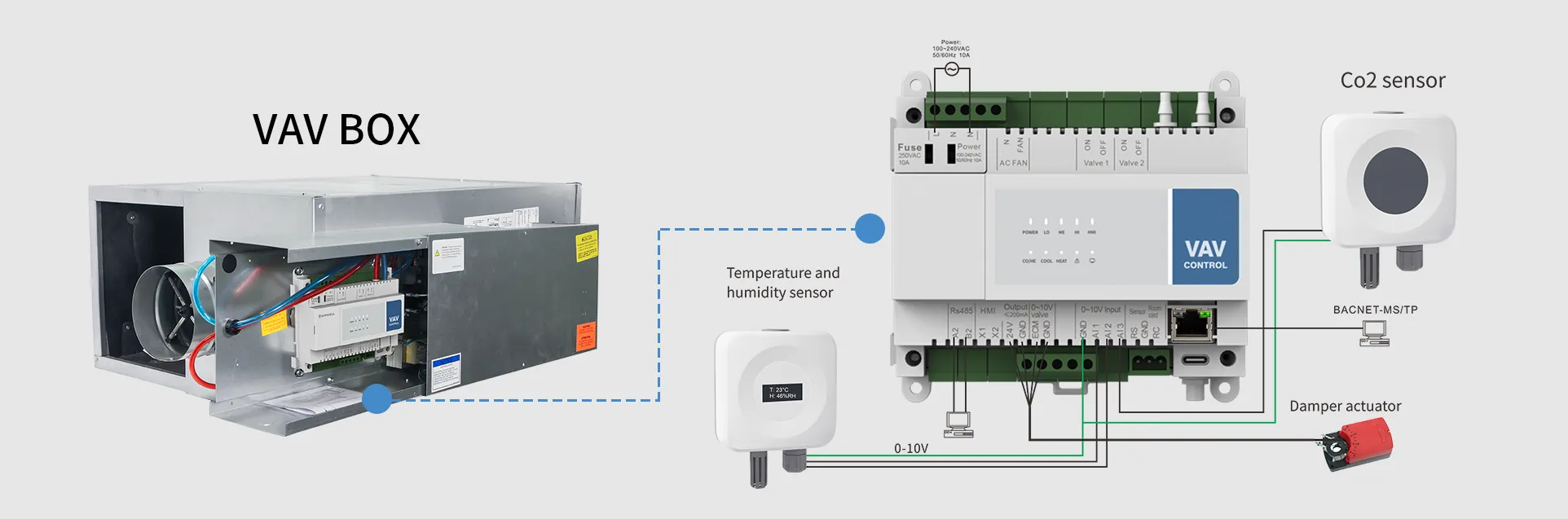
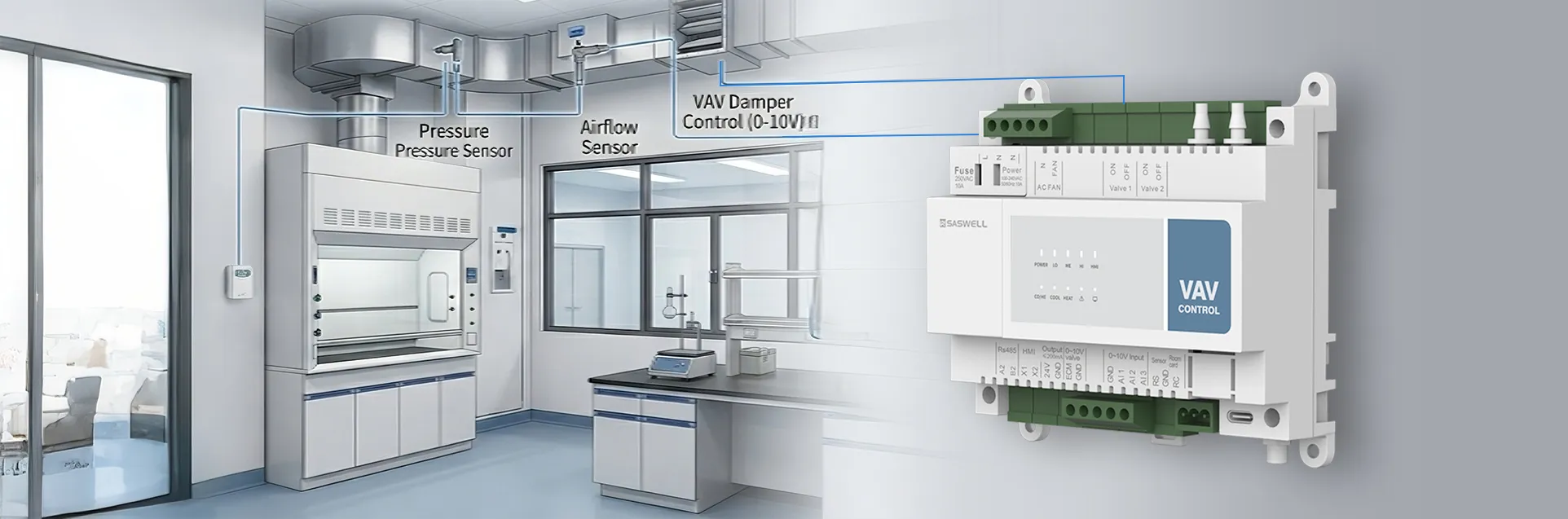
- The Logic: A dedicated, decoupled VAV controller (HDC218) with pre-loaded vertical industry logic.
- The Solution: Unlike DDCs, it's parameter-based (no coding). Unlike VMAs, it's multi-functional (Temp, Pressure, Flow, CO₂ in one) and decoupled (any 0-10V actuator works). Explore the HDC218 BACnet VAV controller for details.
- Verdict: The "Smart Middle Ground" for professional labs.
ALT: Comparison table of VAV control methods: DDC, Integrated VMA, and Saswell vertical solution.
Why Saswell HDC218 Wins in Labs & Cleanrooms
- Vertical Integration: We provide a total ventilation solution. In a cleanroom, you don't just control a valve; you manage a pressure gradient. Our logic handles the interaction between airflow and room pressure out-of-the-box. See our laboratory VAV safety control system for dedicated cleanroom capabilities.
- BAS Connectivity without the "Big Brand" Price: You get full BACnet MS/TP transparency and industrial precision at roughly 1/3 of the price of integrated big-brand units.
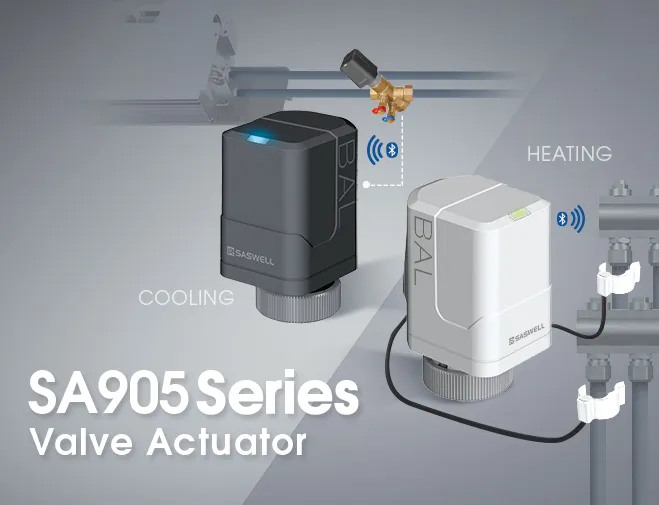
- Decoupled Maintenance: By separating the logic (HDC218) from the muscle (Actuator), we ensure your system is never held hostage by a single supplier's proprietary spare parts. For proven stability, see how we solve VAV system hunting.
- CO₂ & Hydronic Ready: Direct support for DCV and 2-stage reheat — read CO₂‑based DCV for LEED and hydronic reheat optimization.
Conclusion
Conclusion
For engineers specifying ventilation for critical environments, the choice is clear: avoid the high barrier of DDC programming and the closed‑ecosystem trap of VMA. The Saswell vertical solution delivers lab‑grade precision, open BACnet integration, and a fraction of the total cost.
For commercial building applications, explore our energy-efficient VAV solution for offices. For direct brand alternatives, compare Siemens vs Saswell.
Take Action Today
- View full product line: Saswell VAV Controllers
- For commercial buildings: Energy-efficient VAV solution for offices
- Critical environments (labs/cleanrooms): Lab VAV safety control system
- Request a vertical solution consultation: Contact our engineering team for lab/cleanroom project support.